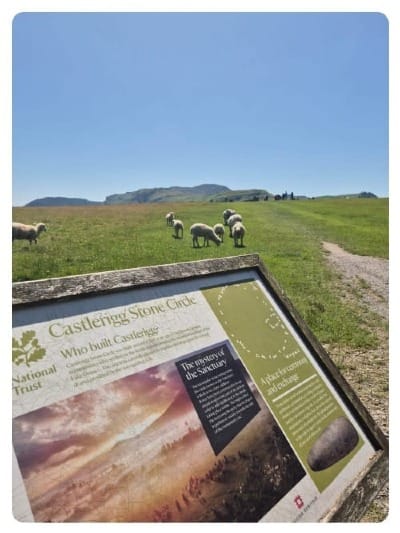
Castlerigg Stone Circle, Keswick
“What’s special about the rocks?
Um, I don’t know.
Exactly. So why are we here?”
~some random child to their parent.
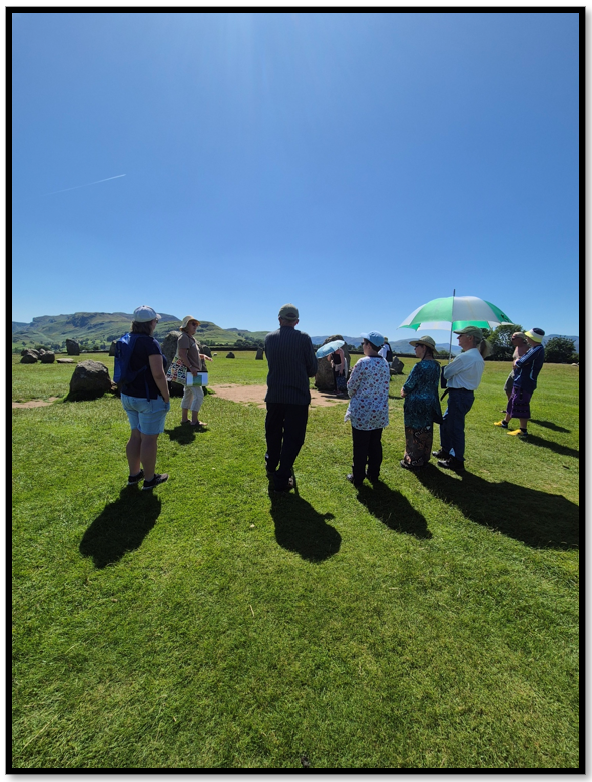
Joanna from English Heritage put on a fantastic 45 minute talk at Castlerigg Stone Circle on Saturday 12th July.
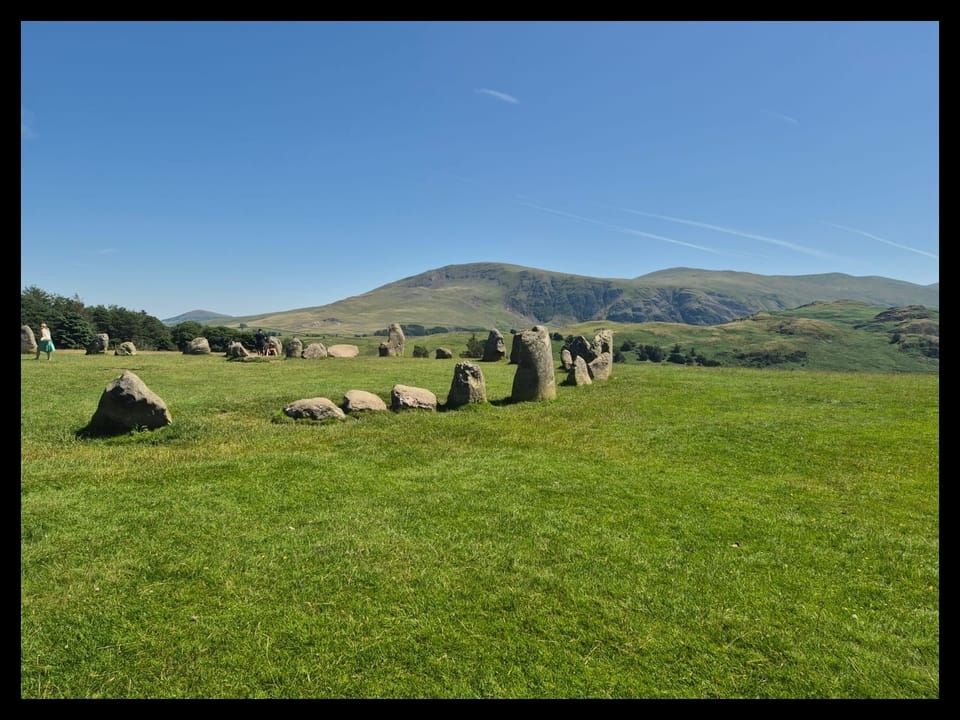
The stone circle has been dated at 4500 years old, not because of anything in the circle itself, but due to its similarity to other circles that have been positively dated. These include Maes Howe, Ness of Brodgar, and Newgrange, the last of which potentially confirms- or at least, adds credence to- a link between the peoples of Ireland and Cumbria. The circle is elliptical, another link to Irish stone circles, made of unworked and unshaped Borrowdale volcanic rock, carried down the valley by a glacier which also formed the moraine hill upon which the circle was created. There is a possibility that the area all around the circle was once wooded before becoming ploughed farmland. Traces of earthworks that might have been a henge once could also be simply remnants of more recent ploughing – one of the many mysteries of the stones.
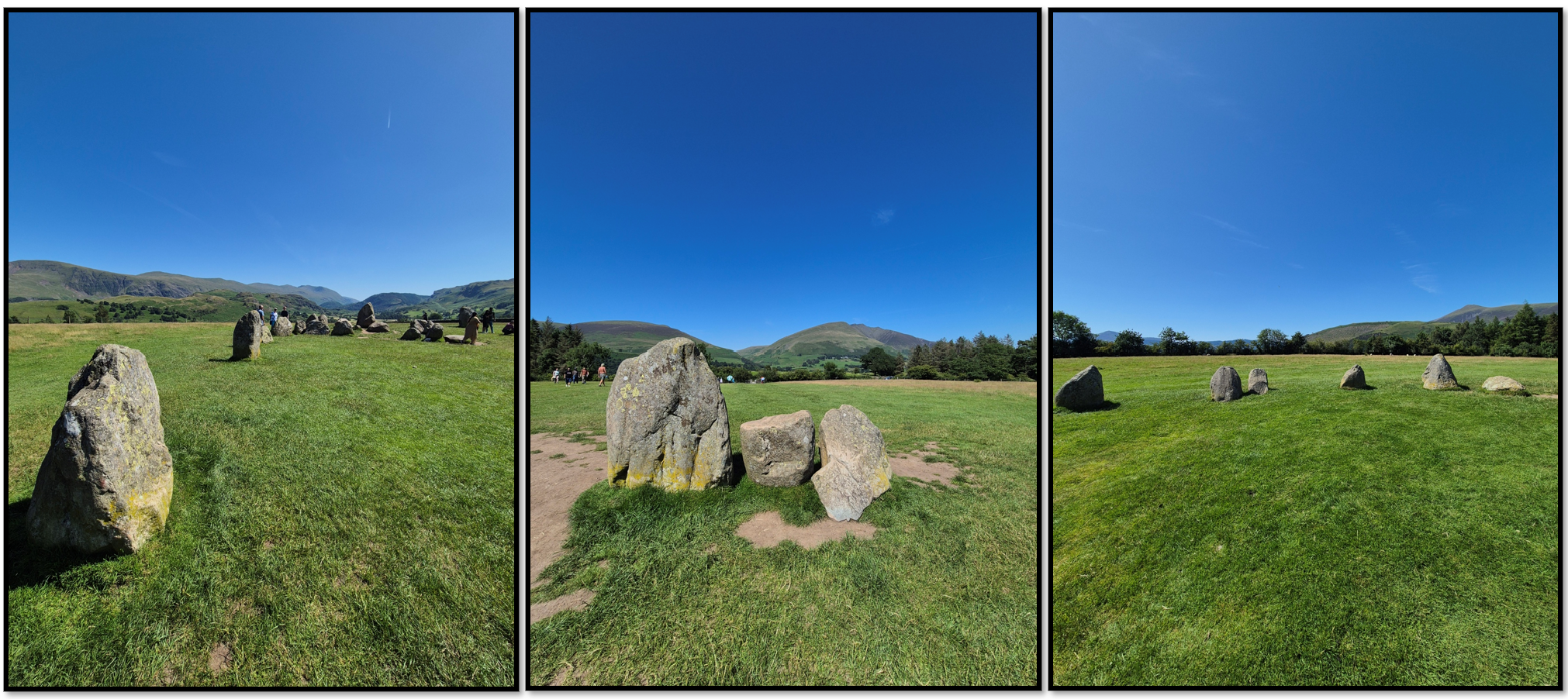
The portal entrance to the circle aligns with true north – something almost certainly purposefully achieved, a feat especially impressive considering the north star in neolithic times was not in its current position, the earthly tilt having changed in the many years since. There are 2 potential graves or kists, equidistant from the portal which could be bronze or copper age, which could indicate the site would have been in continuous use for 1000 years. The sanctuary is a mediaeval creation and possibly uses stones originally located in the outer ring, moved to create the inner structure. Later stone movements could be due to people in the Romantic period tilting the rocks towards a solstice in order to appear more mysterious. Victorian graffiti and an undateable diamond shape carved into the stones are the only embellishment found. Diamonds have been posited to be a wayfaring tool in neolithic times, guiding travellers on their way, however there is no way to empirically date the carving nor confirm its use.
A theory hypothesised by Aubrey Burl explores the idea that the size of a stone circle correlates to the size of the community that used it. Consequently, the largest stone circles are comparable to the largest cathedrals whereas small circles can be seen as parish churches. Castlerigg Stone Circle is among the larger circles, although not quite at York Minster size.
The use of the circle still remains a mystery but there are several theories that were shared by Joanna. The circle is unlike many others in that is does not relate directly to a body of water. However, it lies at the congruence of 5 valleys which could make it a strategic trading post for several communities. The stones in this case could simply be a signifier of the area in which trading takes place and archaeological evidence confirms objects were traded, although not specifically in the area of the circle itself due to a loack of archaeology at the site. Another theory is that the circle was a justice centre – if we believe size correlates to community, the local people were likely large enough to require a judicial process that could have taken place within the confines of the circle. There are of course always other theories, such as the circle being a pagan ritual site where virgins were sacrificed, a story written by a vicar in a book currently held by the Keswick Museum. Although unnamed, the site the vicar speaks of is almost certainly Castlerigg itself.
Digs haven’t occurred at the site since the Victorian era however records from those explorations are vague and/or non-existent and the finds have been lost as well. There is also always the possibility that Vikings, common in the area, plundered the site and removed anything of value beyond the stones themselves. That said, interest from the managing parties of the site has increased in recent years. There has also been some Ground Penetrating Radar completed by a postgraduate student and their conclusions will be published in their thesis which hopefully answers a few questions or at least adds some fact to the mysterious place.
Joanna was a lovely guide, very knowledgeable, happily taking questions from the group, and also defending the site from people who could potentially damage it (some locals playing a ball game). Her passion for Castlerigg and other similar sites, tying them together through similarities as well as contrasts, kept the group captivated and was highly informative.